
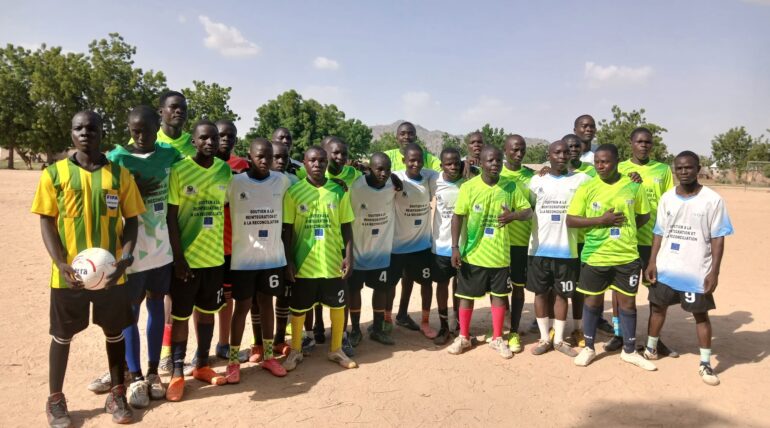
On 24 June 2026, something historic happened in Meri, in Cameroon’s Far North. For the very first time, community members and former associates from the Meri DDR centre came together not around a negotiation table, but around traditional dances, games, a shared meal, and a football match. A festival to celebrate what months of dialogue and sensitisation had made possible: reconciliation.
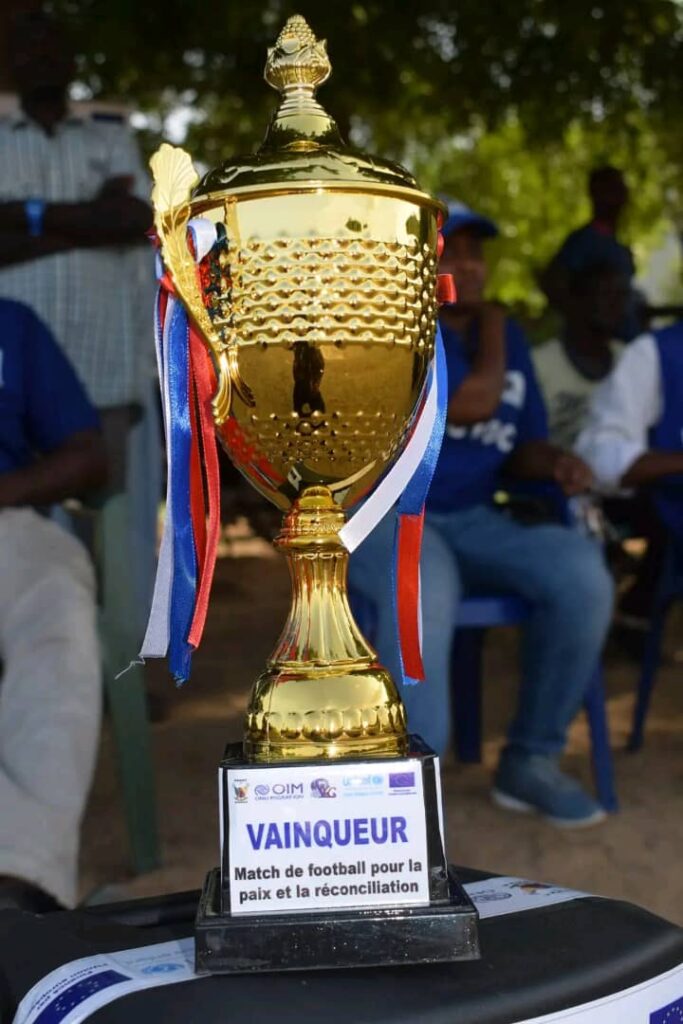
A Festival Built on a Long Journey
The Cultural, Recreational and Sports Festival for Peace and Reconciliation did not happen overnight. It is part of the reintegration strengthening project implemented by Local Youth Corner Cameroon (LOYOC), funded by the European Union, in partnership with the International Organization for Migration (IOM) and the National Committee for Disarmament, Demobilisation and Reintegration (CNDDR).
Before this day of celebration could happen, LOYOC and its partners had already spent months working alongside peace committees, listening clubs, women’s and youth organisations, and traditional authorities to carry out community dialogues and sensitisation sessions on the reception and reintegration of former associates. The festival was the natural continuation of that work: a celebration of a reconciliation already underway.
A Day of Culture, Play, and Sport
The day unfolded in two parts. In the morning, the cultural and recreational programme came to life at the Safe Space for Girls and Women in Meri, a facility constructed by IOM under the Gender Youth Project Initiative (GYPI). Approximately 400 participants, men, women, children, host community members, and reintegrated former associates, gathered in this space for a morning filled with colour, energy, and meaning.
Traditional dances took centre stage. The Gaolaga, performed by young people alongside elders in a powerful act of cultural transmission and continuity, the Makene meaning “move forward,” the Nguissar women’s dance group, the Dalkondo group, and many others took turns performing. Through their songs, a common message rang out: peace, tolerance, reconciliation, and the importance of welcoming former associates back as full members of the community.
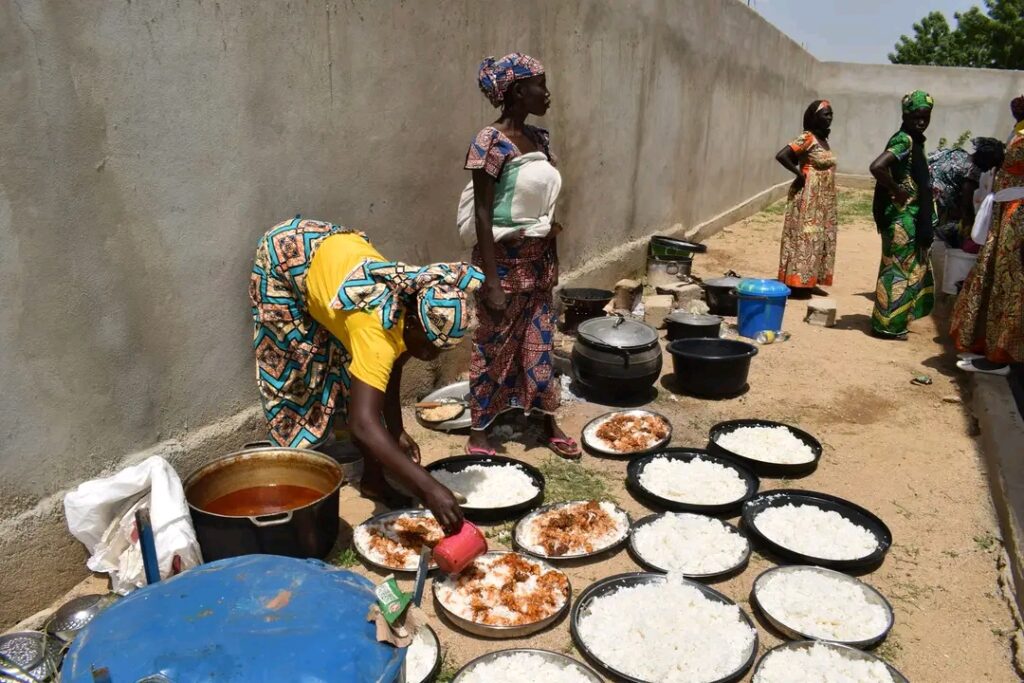
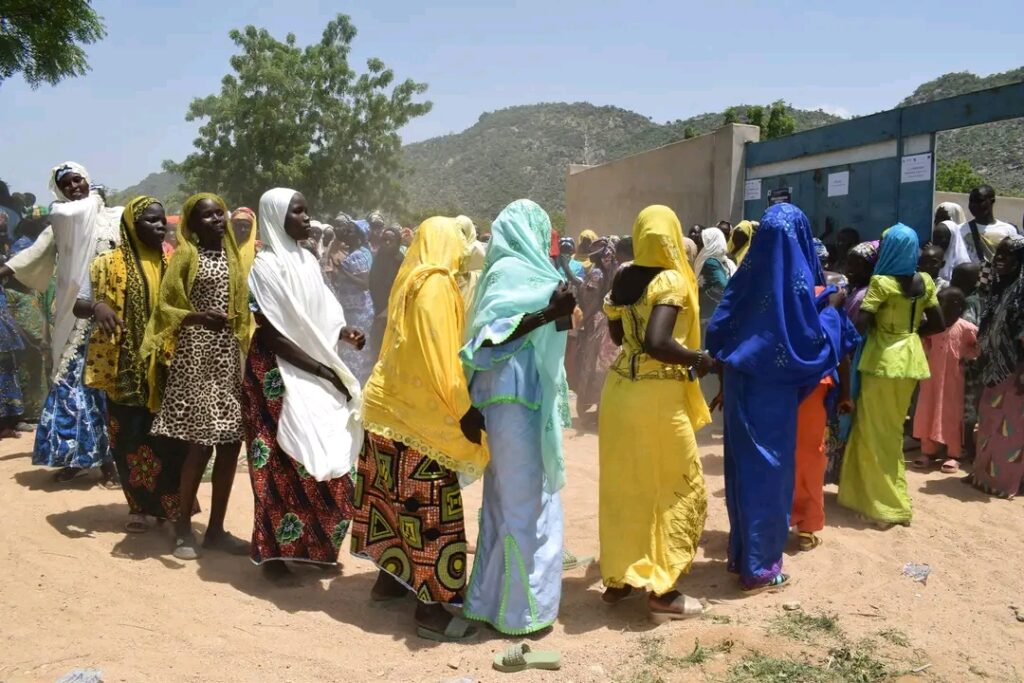
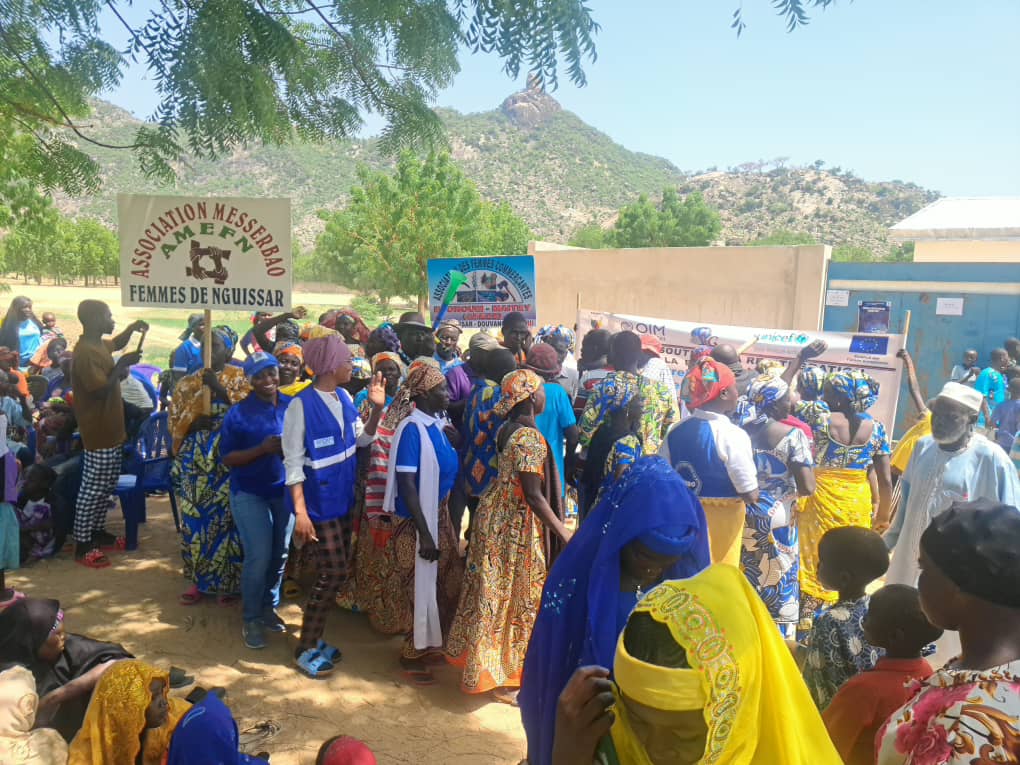
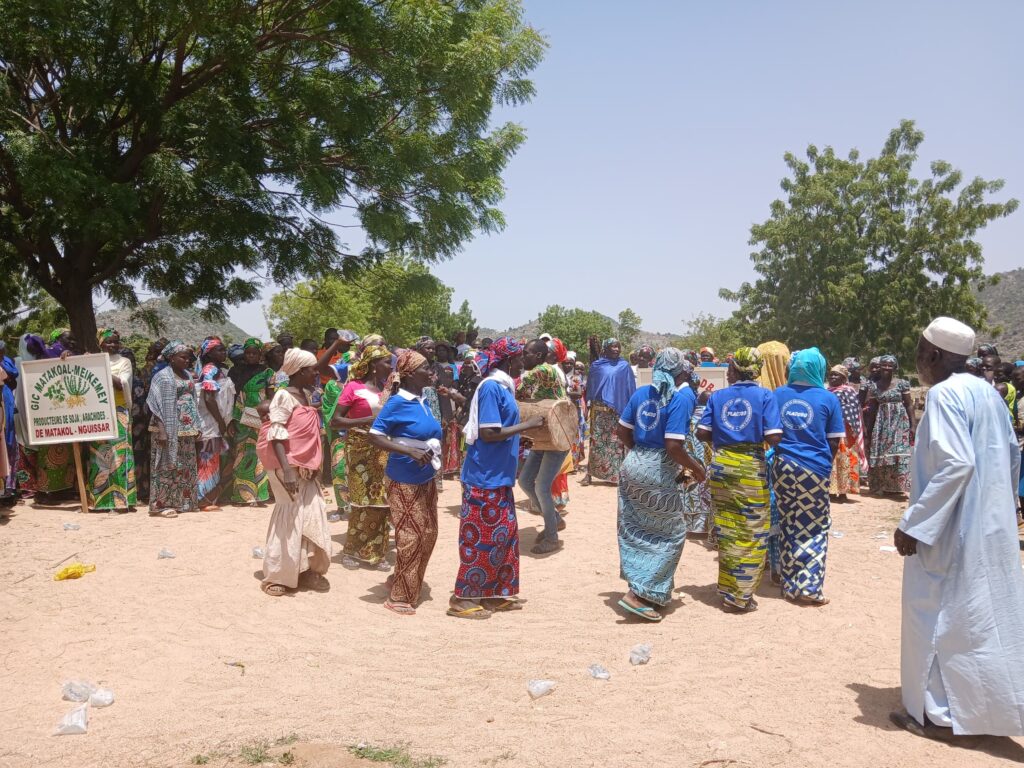
Elders shared wisdom and life experiences on the value of social cohesion and living together. Games brought all generations into the same playful space: sack races, egg-and-spoon races, and a cooking competition created moments of laughter and closeness between people that conflict had long kept apart.
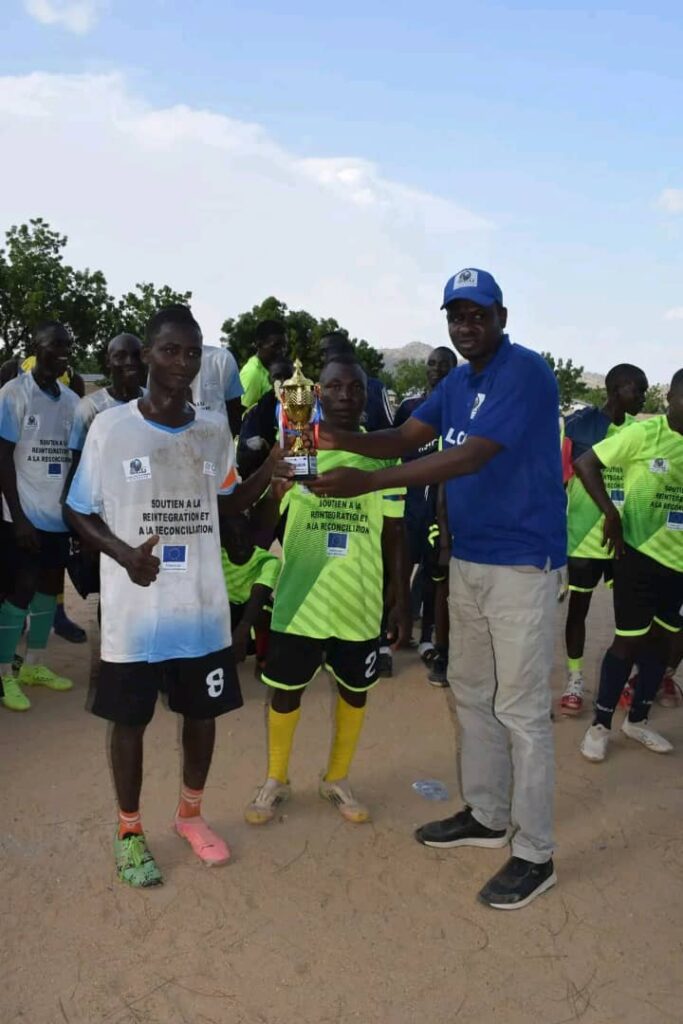
In the evening, the festival moved to the Lycée Classique de Meri stadium for a football match animated by traditional dances, with former associates and community members playing side by side on the same teams.
The day closed with a communal meal where different ethnic groups cooked together and shared food and dolo, a powerful symbol of conviviality and togetherness.
Concrete Signs of Reconciliation
What made this day truly historic were the testimonies of cohesion that emerged naturally throughout the event. Participants themselves noted that this was the very first time such a festival had been organised to genuinely honour reconciliation between the community and former associates.
But beyond the symbols, reconciliation in Meri is taking very concrete forms. Marriages are already taking place between former associates and host community members. Former associates now participate in community meetings aimed at strengthening collective resilience. These are signs that what began as a difficult process of acceptance has become a lived reality.
Peace Is Built and Peace Is Celebrated
The Meri Festival is a concrete demonstration of what LOYOC has stood for since its founding: lasting peace is not decreed. It is built patiently, through dialogue, sensitisation, and the genuine involvement of traditional leaders and communities themselves. And when it begins to take root, it deserves to be celebrated.
Traditional leaders from Meri, the representative of the Sub-Prefect of Meri, and the representative of the Meri DDR Centre were all present to lend their official support to this historic day. Alongside LOYOC, women’s and youth organisations, the health organisation APSANTE, peace committees, and listening clubs all contributed to making this a community success in the truest sense of the word.